There is a familiar pattern to leadership offsites. Everyone agrees that time away from the office matters, yet the days themselves often feel thinner than expected. Conversations begin late because arrivals are staggered, attention drifts because the setting is busy, and the practical effort of navigating a crowded destination quietly consumes the energy that was meant for strategy. By the time people settle into the work, the calendar is already pulling them home again. It is rarely a question of commitment. More often, it is a question of timing.
Many teams instinctively plan around the traditional holiday season. August appears convenient because diaries are lighter, yet on the Ligurian coast it is also the period when heat, crowds and demand reach their peak. Those conditions are well suited to leisure, but focused discussion asks for something different. Strategic thinking benefits from space, patience and the freedom to follow an idea beyond the first answer. Those qualities become harder to find when every restaurant is full, every journey takes longer than expected and every practical arrangement competes with the rhythms of the busiest weeks of the year.
Attention follows the environment
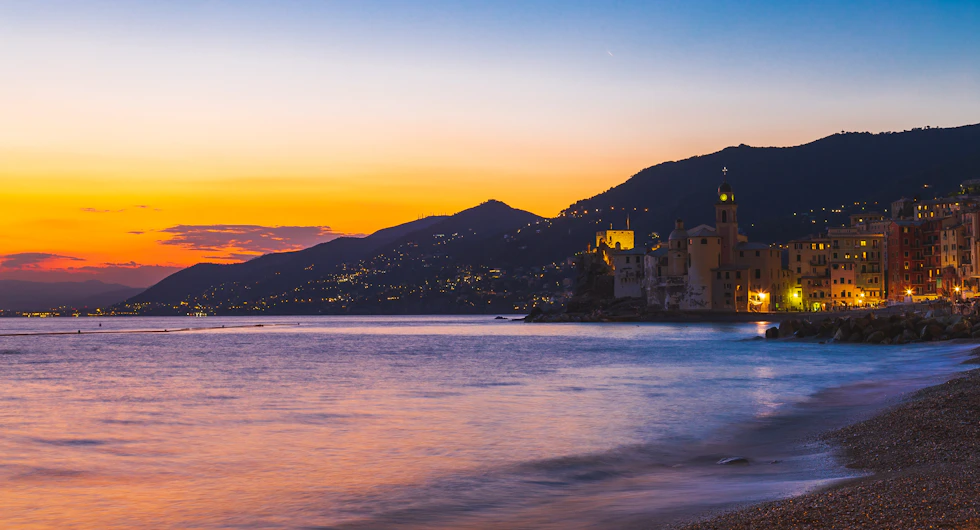
The change that arrives after Ferragosto is subtle rather than dramatic. As late August passes, the towns gradually return to their residents. Streets become less hurried, tables are easier to find and the coast begins to recover its everyday pace. By late September and into October, the atmosphere has shifted without losing what makes Liguria appealing in the first place. The sea typically remains swimmable, often around 22–23C during September, while the light becomes softer across the bay and the evenings encourage conversation rather than retreat from the day’s heat.
That quieter rhythm has practical consequences for leadership teams of three to eight people. Travel is generally easier to coordinate, and staying in one location becomes a realistic choice rather than a compromise. Instead of moving between meeting rooms, restaurants and shared spaces, the group can arrive once and remain together. It sounds like a small operational detail, but anyone who has organised senior leaders knows that reducing unnecessary movement protects the one resource that cannot be replaced: uninterrupted attention.
We have come to think that the success of an offsite depends primarily on the agenda. The agenda matters, of course, but attention is what allows that agenda to become useful. Strategy rarely emerges from perfectly timed sessions alone. It appears during the pause after breakfast when someone returns to yesterday’s question, across a long table where an assumption is challenged without interruption, or on a terrace where the conversation continues because nobody feels the pressure to leave for the next reservation. Those moments cannot be scheduled, yet they can be made more likely.
This is where the setting plays a supporting rather than starring role. A private villa removes a surprising amount of quiet friction. There is no reception desk to negotiate, no shared lounge occupied by other guests and no continual movement between private and public spaces. The environment becomes consistent from morning until evening, allowing conversations to pick up naturally instead of restarting every time the group changes location. For executive teams discussing sensitive decisions, that continuity often matters as much as any formal meeting session.
When we host small leadership groups, we notice that they rarely ask for elaborate facilities. What they value is the ability to remain together without compromise. Separate terraces make it possible for smaller conversations to develop without competing for space, while four bedrooms and four bathrooms allow up to four guests to stay comfortably without turning practical arrangements into another item on the agenda. None of these details create strategic clarity by themselves. They simply remove obstacles that would otherwise interrupt it.
The distinction is important because executive teams are naturally sceptical of environments that promise inspiration. Inspiration is unpredictable. Attention is more dependable. An environment that reduces distractions, simplifies logistics and allows people to remain present with one another does not guarantee better decisions, but it gives those decisions a fairer chance to emerge. That is a quieter promise, and perhaps a more credible one.
September on the Ligurian coast illustrates this difference particularly well. The brightness of high summer softens into clearer mornings and longer shadows across the hills above Alassio. Open doors carry the scent of sea salt with the occasional trace of rosemary or jasmine from nearby gardens rather than the intensity of midday heat. An aperitivo, the familiar Italian tradition of pre-dinner drinks and light bites, becomes less about escaping the sun and more about extending a conversation that has found its own rhythm. These are not luxuries added to the working day. They are part of an environment that asks less of people’s attention and therefore leaves more of it available for the work itself.
That balance between work and reflection is often misunderstood. Productive offsites are not productive because every hour is filled. They succeed because the transitions between formal discussion and informal conversation become almost invisible. One person wanders towards the pool house for a coffee, another remains at the table with notes spread across it, two colleagues continue a debate while looking out across the bay. By the time everyone gathers again, the conversation has usually advanced rather than paused. The day feels coherent instead of segmented.
For founders and small executive teams, this coherence has a practical value that extends beyond the few days away. Decisions made without constant interruption tend to be easier to communicate afterwards because they have been examined from more than one angle. Alignment develops through repeated conversations rather than a single workshop. The environment cannot create agreement where none exists, but it can give disagreement the time and calm it requires to become productive.
It is also worth recognising what shoulder season does not attempt to be. It does not compete with August on energy or spectacle. The coast is quieter by design. That quietness is precisely its strength for strategic work. Lower seasonal demand often makes planning more straightforward, while the gentler pace reduces the sense that every experience must be fitted into an already crowded schedule. The result is not less activity but fewer unnecessary decisions competing with the important ones.
The original question, then, may have been the wrong one. Rather than asking where to hold a peak-season offsite, it is often more useful to ask when the conditions are most likely to support the conversations that matter. For many leadership teams, late September through mid-October offers a better answer than the traditional summer calendar. The value lies less in the destination itself than in the attention that the season quietly makes possible. If that perspective resonates, we are always happy to discuss whether the villa fits the kind of work you have in mind, without assuming that it always will.